

If Your Brand Is Posting but Not Selling, You’re Already Losing
Every day, your competitors are buying attention, shaping opinions, and converting followers into paying customers on social media. And if your brand is not doing the same, strategically, you are not just missing opportunities. You are handing revenue away.
Social media is no longer a “branding channel.”
It is a sales engine, a trust builder, and a decision-making platform.
The question is not whether you should invest in social media.
The real question is whether your social media marketing strategy is built to generate business outcomes or just likes.
This guide explains what social media marketing is, how it works, and how leaders use it to turn attention into customers.
What Is Social Media Marketing?
Social media marketing is the use of platforms like LinkedIn, Instagram, Facebook, X, and YouTube to promote a brand, build relationships, drive traffic, and convert audiences into customers. 73% of marketers say social media marketing has been “somewhat or very effective” for their business growth.
It combines:
- Content
- Advertising
- Data
- Automation
- Community engagement
When done correctly, social media marketing supports the full customer journey, from discovery to conversion to loyalty.
How Social Media Marketing Works in Today’s Market
Social media marketing works through intent, timing, and trust.
First, platforms collect user behavior data.
Second, algorithms distribute content based on relevance.
Third, brands use content and ads to influence decisions.
Modern social media marketing includes:
- Organic content for authority
- Paid campaigns for reach and speed
- Retargeting for conversion
- Analytics for optimization
This is not guesswork.
It is data-backed execution.
Benefits of Social Media Marketing for Businesses
The benefits of social media marketing go far beyond visibility.
Key benefits include:
- Higher brand trust and recall
- Direct access to decision-makers
- Lower customer acquisition costs
- Faster feedback from real users
- Scalable lead generation
For leadership teams, the biggest advantage is control.
You control the message.
You control the audience.
You control the growth lever.
Social Media Marketing Platforms Businesses Must Know
Not all platforms serve the same purpose.
Choosing the right social media marketing platforms matters.
- LinkedIn – B2B authority, decision-makers, lead generation
- Instagram – Brand building, storytelling, product discovery
- Facebook – Retargeting, communities, paid reach
- X (Twitter) – Thought leadership, brand voice, trends
- YouTube – Long-form trust, education, evergreen traffic
Strong brands do not chase every platform.
They dominate the ones that matter.
B2B Social Media Marketing: How Decision-Makers Buy
B2B social media marketing is not about going viral.
It is about influence.
Executives buy from brands they trust.
Trust is built through:
- Educational content
- Consistent messaging
- Industry insights
- Social proof
LinkedIn, in particular, drives high-value B2B conversations.
When paired with paid ads and retargeting, it becomes a predictable lead engine.
Social Media Marketing Strategy That Drives Revenue
A real social media marketing strategy starts with business goals, not posts.
A strong strategy includes:
- Clear objectives (leads, sales, authority)
- Defined target audience
- Platform-specific content
- Paid + organic alignment
- Conversion tracking

How to Market on Social Media Effectively
If you want to know how to market on social media, focus on systems, not tactics.
Effective execution requires:
- Content calendars
- Funnel-based messaging
- Platform-native formats
- Retargeting sequences
- Continuous testing
Posting randomly does not build pipelines.
Systems do.
Social Media Marketing Tips That Actually Work
Here are social media marketing tips that drive results, not vanity metrics:
- Post with a purpose
- Speak to one audience at a time
- Show expertise, not hype
- Optimize for engagement and saves
- Test paid campaigns early
- Track conversions, not likes
Good content gets attention.
Smart content gets revenue.
Tools for Social Media Marketing Teams
Execution at scale requires the right tools for social media marketing.
Common tools include:
- Scheduling platforms
- Analytics dashboards
- Creative testing tools
- Ad managers
- CRM integrations
The goal is efficiency.
More output. Less waste. Better insights.
From Followers to Customers: The Conversion Layer
Followers do not equal revenue.
Conversion does.
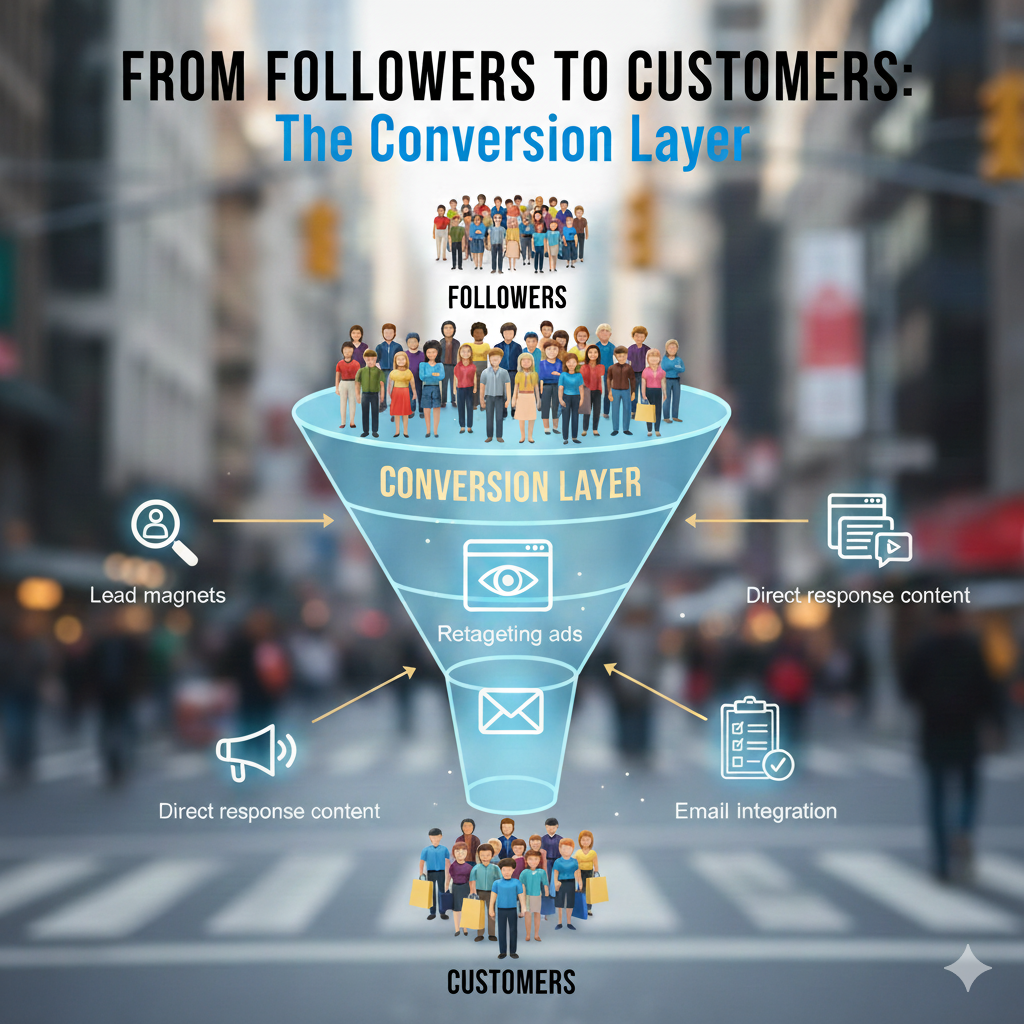
Successful brands use:
- Lead magnets
- Retargeting ads
- Direct response content
- Landing pages
- Email integration
Social media creates demand.
Funnels convert it.
Common Mistakes Businesses Make
Many companies fail because they:
- Post without strategy
- Ignore paid promotion
- Chase trends instead of data
- Fail to retarget
- Do not track ROI
Social media is not free.
It costs time or money.
Wasted effort costs both.
Why Businesses Outsource Social Media Marketing
Leadership teams outsource because:
- In-house teams move slowly
- Platforms change constantly
- Expertise matters
- Results matter more than activity
The right partner brings:
- Strategy
- Execution
- Optimization
- Accountability
And most importantly, results.
Why Social Media Marketing Is a Competitive Advantage
Your audience is already online.
Your competitors are already investing.
The only variable is execution.
Social media marketing is no longer optional.
It is a growth requirement.
Brands that move now win attention early.
Brands that wait pay more later.
Social Media Is Where Revenue Is Built
Social media marketing is no longer about visibility or posting for presence, it is a direct driver of revenue, trust, and long-term brand equity. In today’s market, decision-makers research brands on social platforms before engaging, and the companies that win are those with a clear social media marketing strategy, the right platforms, the right tools, and content designed to convert, not just engage. When executed with intent, data, and consistency, social media becomes a scalable growth engine that turns attention into demand and demand into customers. Businesses that act now gain market share; those that delay pay more to catch up later.
FAQs
What are the 4 marketing strategies?
The four core marketing strategies are product strategy, pricing strategy, placement strategy, and promotion strategy. Together, they define what you sell, how much you charge, where you sell it, and how you communicate value to your target audience across digital and traditional channels.
What are the 4 stages of social media marketing?
The four stages of social media marketing are awareness, engagement, conversion, and retention. Brands first attract attention, then build interaction, convert followers into customers, and finally nurture relationships to encourage repeat business and long-term brand loyalty.
What is B2B in social media?
B2B in social media refers to using platforms like LinkedIn, X, and YouTube to market products or services to other businesses. It focuses on authority, education, and trust-building rather than entertainment, helping brands influence decision-makers and generate qualified leads.
What are the 7 steps of marketing strategy?
The seven steps include market research, audience targeting, goal setting, value proposition creation, channel selection, content and campaign execution, and performance measurement. Following these steps ensures marketing efforts stay aligned with business objectives and deliver consistent, measurable growth.