

Search engines are smart, but they are not human. They do not automatically understand context, intent, or relationships the way people do. This is where structured data becomes critical. To answer the question what is schema markup, it is a way to help search engines clearly understand what your content means, not just what it says.
Schema markup gives search engines extra information about your pages. It explains your content in a structured format so Google can interpret it correctly and display richer results in search. In today’s competitive SEO landscape, schema markup is no longer optional. It is a visibility advantage.
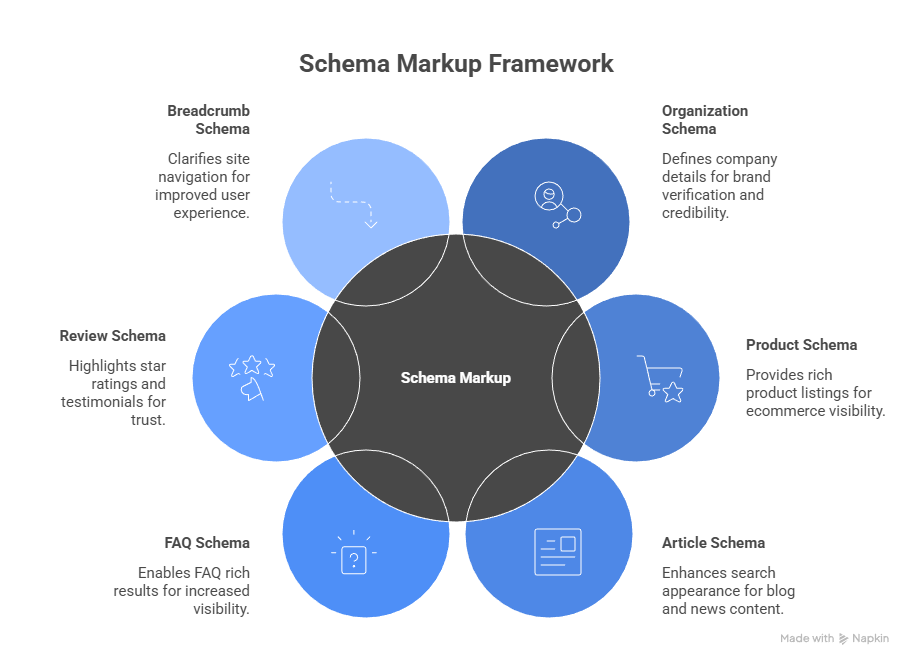
What Is Schema Markup
Schema markup is a form of structured data added to a website’s HTML. It uses a standardized vocabulary to label content elements like products, articles, reviews, FAQs, events, and organizations.
Search engines like Google, Bing, and Yahoo use schema markup to better understand what a page is about. Instead of guessing, they read structured signals that explain content clearly. This helps them present your pages more accurately in search results.
Webpages that use schema markup receive up to 30% higher click-through rates compared to pages without structured data, because rich results like FAQs, ratings, and product details make listings more visible and trustworthy in Google Search.
In simple terms, schema markup tells search engines exactly what your content represents.
How Schema Markup Works
Schema markup works by adding structured labels to content. These labels define meaning. For example, they tell Google whether a number is a price, a rating, a date, or a business phone number.
Without schema, search engines see plain text. With schema, they see context.
Schema markup is built using the vocabulary from Schema.org, a collaborative project supported by major search engines. This shared standard ensures consistency in how data is interpreted across platforms.
Types of Schema Markup
1) Organization Schema
Organization schema is used for businesses and brands. It defines company details like name, logo, address, contact information, and social profiles. This helps search engines verify brand identity and improves brand credibility in search results.
2) Product Schema
Product schema is used for ecommerce pages. It provides details such as price, availability, product name, description, and reviews. This allows Google to show rich product listings directly in search results.
3) Article and Blog Schema
Article and blog schema are used for blog posts, news articles, and editorial content. They help search engines understand authorship, publish dates, and content type, improving eligibility for enhanced search appearance.
4) FAQ Schema
FAQ schema is used for question-and-answer content. It enables FAQ rich results, allowing questions and answers to appear directly in search listings, increasing visibility and screen space.
5) Review and Rating Schema
Review and rating schema highlight star ratings and testimonials. This builds trust and social proof in search results and helps users evaluate credibility before clicking.
6) Breadcrumb Schema
Breadcrumb schema clarifies site navigation structure. It helps Google show breadcrumb paths instead of full URLs, improving clarity and user experience in search listings.
Why Schema Markup Is Important for SEO Especially Today
Search results are more competitive than ever. Ranking alone is no longer enough. Schema markup helps search engines understand content better, which improves how and where your pages appear.
Schema markup also helps content qualify for rich results, which increase visibility without requiring higher rankings. In addition, structured data builds trust by displaying accurate, enhanced information directly in search.
For modern SEO, schema markup is a relevance and credibility signal.
How Schema Markup Improves Search Visibility
-
Rich Snippets in Search Results-
Schema markup enables rich snippets like star ratings, FAQs, prices, availability, and event details. These elements make listings more informative and visually prominent.
-
Higher Click Through Rates-
Search results with rich features stand out. They attract attention and build trust faster. This leads to higher click-through rates even without ranking improvements.
-
Better Indexing and Context-
Schema markup improves semantic understanding. It helps search engines connect related entities, understand intent, and index content more accurately, especially for complex pages.
Common Examples of Schema Markup in Google Search
You see schema markup in action every day, even if you do not notice it.
Common examples include:
- Product listings showing price and reviews
- FAQ dropdowns under search results
- Event listings with dates and locations
- Breadcrumb navigation paths instead of raw URLs
These enhanced results are powered by schema markup.
How to Add Schema Markup to a Website
1) Using JSON-LD Format
JSON-LD is the recommended format by Google. It is clean, flexible, and added separately from the main HTML content. This makes it easier to manage and update without affecting page layout.
2) Using Plugins for CMS Platforms
Content management systems like WordPress offer plugins that generate schema automatically. Ecommerce platforms also support schema through built-in features or extensions.
3) Using Google Structured Data Tools
Google provides tools to test and validate schema markup:
- Schema Markup Validator
- Rich Results Test
These tools help ensure your structured data is implemented correctly.
Best Practices for Schema Markup
Use schema types that are relevant to the content on the page. Accuracy matters. Do not mark content that users cannot see. Keep schema updated when content changes.
Always follow Google’s structured data guidelines. Proper implementation ensures eligibility for rich results and avoids penalties.
Common Schema Markup Mistakes to Avoid
Many websites misuse schema markup. Common mistakes include adding incorrect schema types, marking hidden content, and overusing structured data across unrelated pages.
Schema markup should enhance clarity, not manipulate search results. Misuse can lead to loss of rich results or manual actions.
How to Check If Schema Markup Is Working
You can verify schema implementation using:
- Google Rich Results Test
- Google Search Console Enhancements Report
These tools show whether your pages are eligible for rich results and highlight errors or warnings that need fixing.
Conclusion
Now you understand what schema markup is and why it matters. Schema markup improves how search engines read, understand, and display your content. It enhances visibility, builds trust, and increases click-through rates by qualifying pages for rich results. In a competitive SEO environment, implementing schema markup is one of the most effective ways to improve search performance without relying solely on rankings. Adding structured data today prepares your website for better visibility tomorrow.
FAQs
Q) What is schema markup in SEO?
Schema markup in SEO is structured data added to website code that helps search engines understand content better. It explains what each element means, not just what it says, allowing Google to display rich results like FAQs, ratings, prices, and event details.
Q) Does schema markup improve rankings?
Schema markup does not directly improve rankings, but it improves search visibility. By enabling rich snippets and enhanced listings, schema markup increases click-through rates, user trust, and relevance signals, which can indirectly support better SEO performance over time.
Q) Is schema markup necessary for SEO in 2025?
Yes, schema markup is increasingly important for SEO in 2025. Search engines rely more on structured data to understand content, support AI-driven search features, and deliver rich results, making schema markup essential for visibility in competitive search environments.
Q) What is the best schema format to use?
The best schema format to use is JSON-LD. Google recommends JSON-LD because it is easy to implement, flexible to update, and does not interfere with page design. It also reduces errors compared to inline or microdata schema formats.
Q) Can schema markup be added without coding knowledge?
A) Yes, schema markup can be added without coding knowledge using plugins and tools. Platforms like WordPress offer schema plugins, and ecommerce systems include built-in structured data features, allowing businesses to implement schema markup with minimal technical effort.