
Well, search has changed. Again!
Ten years ago, ranking on page one of Google was the goal. Five years ago, featured snippets became prime real estate. In 2026, the battlefield looks different. AI engines now summarize answers. Users ask complex questions. And clicks are no longer guaranteed.
Welcome to the era of GEO! (generative engine optimization)
If you are still optimizing only for blue links, you are playing yesterday’s game. Marketers must now understand the difference between traditional SEO and GEO/ generative engine optimization, and how to win in both.
Let’s break it down clearly.
Let’s Understand the Traditional SEO
We are aware that traditional SEO focuses on improving website visibility in search engine results pages (SERPs). The objective is simple: rank higher for targeted keywords and drive organic traffic.
Core elements include:
- Keyword research
- On-page optimization
- Technical SEO
- Backlinks
- Content optimization
- User experience
Search engines like Google crawl pages, index them, and rank them based on relevance and authority. When users search, they see a list of links. They click. You get traffic.
The model is straightforward: optimize → rank → get clicks.
But the way users consume information has evolved.
By 2026, over 40% of search queries are influenced by AI-generated answers, reducing traditional click-through rates but increasing the importance of structured, authority-driven content for visibility in generative search experiences.
What Is Generative Engine Optimization?
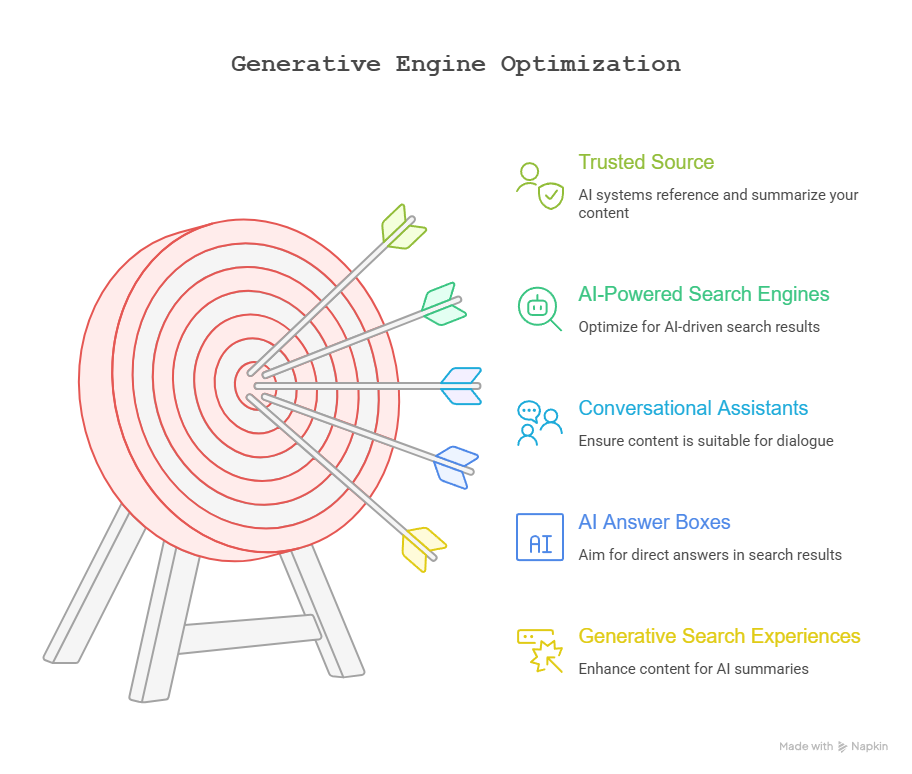

GEO/ generative engine optimization is the process of optimizing content to appear in AI-generated answers from generative search engines and AI assistants.
Instead of showing a list of links, AI engines now generate direct answers by summarizing content from multiple sources.
That changes everything.
With GEO/ generative engine optimization, your goal is not just to rank. It is to become a trusted source that AI systems reference, summarize, and surface in responses.
This includes optimization for:
- AI-powered search engines
- Conversational assistants
- AI answer boxes
- Generative search experiences
In simple terms:
Traditional SEO fights for clicks.
GEO/ generative engine optimization fights for inclusion in AI answers.
So Why This Shift Matters in 2026…
User behavior has shifted dramatically.
Search queries are longer. More conversational. More contextual. Instead of typing “best CRM software,” users now ask:
“What’s the best CRM for a 20-person B2B SaaS startup with a limited budget?”
AI engines interpret and respond directly.
That means fewer clicks. More summarized answers. Higher competition for authority.
If your content is not structured for AI interpretation, it risks invisibility, even if it ranks well.
This is why GEO/ generative engine optimization is not replacing traditional SEO. It is expanding it.
Key Differences: GEO vs Traditional SEO
1. Search Results vs Generated Answers
Traditional SEO: Users see ranked links.
GEO/ generative engine optimization: Users see synthesized answers.
Ranking number one does not guarantee visibility in generative responses.
2. Keyword Focus vs Intent Clarity
Traditional SEO emphasizes keywords.
GEO/ generative engine optimization prioritizes intent, context, and semantic depth.
AI systems analyze meaning, relationships, and authority, not just keyword placement.
3. Backlinks vs Authority Signals
Traditional SEO values backlinks heavily.
GEO/ generative engine optimization values:
- Brand authority
- Structured data
- Clear expertise
- Topical depth
- Trust signals
Backlinks still matter. But credibility and structured clarity matter more.
4. Traffic Metrics vs Visibility Metrics
Traditional SEO measures:
- Organic traffic
- Rankings
- Click-through rates
GEO/ generative engine optimization measures:
- AI citation presence
- Brand mentions in AI answers
- Impression visibility
- Engagement beyond clicks
Traffic may decline, but influence may rise.
How GEO/ Generative Engine Optimization Works
AI systems use large language models trained on vast data. They pull structured, high-authority content to generate responses.
To align with GEO/ generative engine optimization, marketers must focus on:
Clear Content Structure
Use:
- Headings
- Direct answers
- Bullet points
- Concise explanations
AI prefers clarity.
Topical Authority
Cover topics deeply. Not shallow blog posts. Build clusters. Demonstrate expertise.
If you want AI to cite you, you must be the definitive source.
Structured Data
Schema markup helps machines interpret content.
Organization schema, FAQ schema, and article schema support GEO/ generative engine optimization because they add machine-readable context.
Credibility and Expertise
Show:
- Author credentials
- Data references
- Original insights
- Real-world examples
AI systems prioritize reliable sources.
Does Traditional SEO Still Matter?
Yes.
Traditional SEO remains foundational. Technical optimization, page speed, indexing, and backlinks still influence how search engines evaluate content.
GEO/ generative engine optimization builds on traditional SEO, not replaces it.
Think of it this way:
Traditional SEO makes you discoverable.
GEO/ generative engine optimization makes you quotable.
You need both.
Practical Steps to Adapt in 2026
Marketers need a hybrid strategy.
Here is what that looks like:
1. Optimize for Questions
Create content that answers:
- What
- Why
- How
- Comparison queries
- Decision-based queries
Generative engines thrive on structured Q&A formats.
2. Build Topic Clusters
Instead of isolated blog posts, build authority hubs.
Cover every angle of a topic. Link internally. Show depth.
GEO/ generative engine optimization rewards comprehensive coverage.
3. Improve Content Clarity
Short paragraphs. Clear subheadings. Direct answers.
Remove fluff. AI systems value precision.
4. Strengthen Brand Signals
Mentions across reputable sites improve credibility.
Digital PR, thought leadership, and expert positioning are critical in 2026.
5. Use Structured Data Everywhere
Schema is no longer optional.
Structured data improves both traditional SEO and GEO/ generative engine optimization performance.
Challenges Marketers Face
The shift is not simple.
Reduced Clicks
Generative answers may reduce traffic volume. This challenges traditional attribution models.
Harder Measurement
AI visibility is harder to track. Tools are evolving, but metrics remain imperfect.
Content Saturation
AI-generated content is everywhere. Authority matters more than volume.
Publishing more is not the solution. Publishing better is.
The Future of Search: Blended Ecosystems
In 2026, search is no longer just search.
It includes:
- Generative summaries
- Conversational AI
- Predictive recommendations
- Personalized responses
This means GEO/ generative engine optimization must be integrated into overall digital strategy, not treated as a side tactic.
Forward-thinking brands are:
- Investing in authoritative content
- Optimizing for AI interpretation
- Building multi-channel presence
- Strengthening brand trust
Search is becoming answer-first, not link-first.
Common Mistakes to Avoid
- Ignoring generative search completely
- Over-optimizing for keywords without context
- Publishing thin AI-generated articles
- Neglecting structured data
- Failing to demonstrate expertise
GEO/ generative engine optimization requires strategy, not shortcuts.
What Marketers Must Prioritize Now
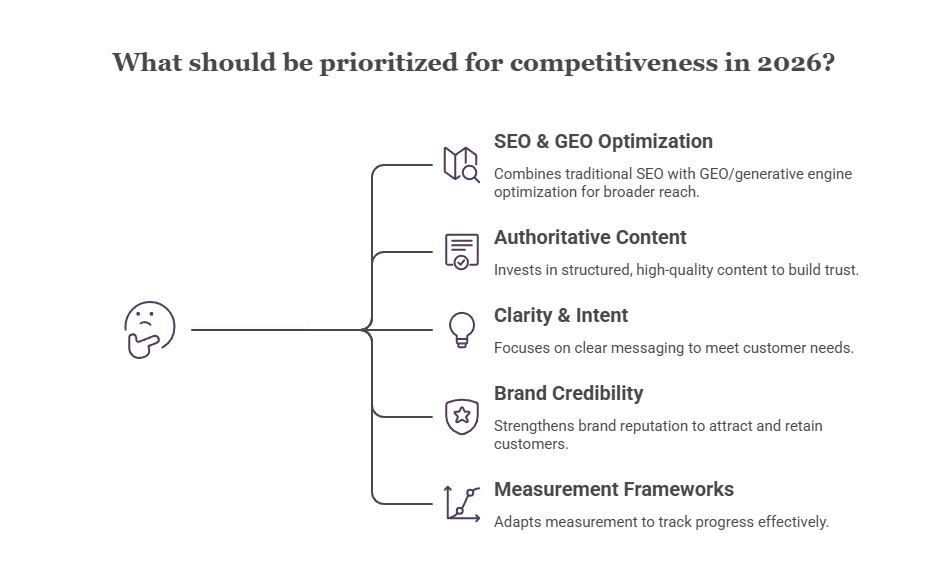
To stay competitive in 2026:
- Combine traditional SEO with GEO/ generative engine optimization
- Invest in authoritative, structured content
- Focus on clarity and intent
- Strengthen brand credibility
- Adapt measurement frameworks
The marketers who adapt early will dominate visibility across both search and AI-generated ecosystems.
Those who delay will lose relevance, even if their rankings look stable.
Final Thoughts
Search has entered a generative era.
Traditional SEO remains essential. It builds foundation, structure, and discoverability. But GEO/ generative engine optimization defines visibility in AI-driven experiences.
Marketers must stop viewing them as competing strategies.
They are complementary forces.
In 2026, success belongs to brands that are both searchable and cite-worthy.
The question is no longer: “Are you ranking?”
The real question is: “Are you being referenced?”
If the answer is no, it is time to evolve your strategy.
FAQs
Q) What is Generative Engine Optimization?
A) Generative Engine Optimization (GEO) is the practice of optimizing content to appear in AI-generated answers instead of only traditional search rankings. It focuses on structured content, semantic clarity, authority signals, and intent depth so AI systems can understand, summarize, and reference your content accurately in responses.
Q) How to win in generative engine optimization?
A) To win in generative engine optimization, create authoritative, structured, and intent-driven content. Use clear headings, direct answers, schema markup, and topic clusters. Demonstrate expertise with data and insights. Strengthen brand credibility and ensure technical SEO fundamentals remain strong to support AI discoverability and trust.
Q) Will GEO replace SEO?
A) GEO will not replace SEO; it will expand it. Traditional SEO builds discoverability through rankings and traffic. Generative optimization ensures your content is cited in AI-generated answers. Businesses need both strategies working together to remain visible across search engines and AI-powered platforms.
Q) Is SEO dying due to AI?
A) SEO is not dying due to AI. It is evolving. While generative search may reduce some clicks, search engines still rely on structured, optimized content to train and generate responses. Strong SEO foundations now support both rankings and inclusion in AI-generated answers.
Q) What is the best generative engine optimization tool?
A) There is no single best generative engine optimization tool yet. Effective strategies combine SEO platforms like Semrush or Ahrefs with AI visibility tracking tools and schema validators. The best approach focuses on authoritative content, structured data, and monitoring brand mentions in AI-generated results.